If you live in London, Ontario, you already know the routine. A winter thaw after a cold snap, a spring downpour that lingers over the Thames Valley, or a late summer storm that overwhelms gutters and street drains. The city’s soil profile and microclimates turn basements into frontline spaces, and a wet basement is usually the first sign that something above or below grade is not cooperating. I have spent years looking at these homes up close, from century houses in Old South to post‑war bungalows in Old East and newer builds in the northwest. The fixes that hold tend to have the same things in common: they respect the way water moves, they match the foundation type, and they correct the upstream causes instead of only treating symptoms.
This is a set of real‑world case studies, anonymized but true to the work. They show how basement waterproofing in London, Ontario succeeds when the right details are handled in the right order, and where shortcuts lead to callbacks.
The ground beneath our feet
Before the casework, a quick orientation to local conditions. London sits on glacial tills, silty clays, and river alluvium. In plain terms, that means variable soils that can hold water for a long time, especially the clayey bands that run across neighborhoods like Old East Village and parts of Oakridge. Clay shrinks in sustained dry spells, then swells when it gets wet. Those cycles open mortar joints, create hairline cracks in poured concrete, and make lightly loaded footings settle differentially. Add to that the flat grades in older streets, disconnected downspouts dumping next to foundations, and a water table that rises seasonally near the Thames River, and you have a perfect setup for seepage or worse.
The housing stock mirrors that variation. Many 1940s to 1960s bungalows use concrete block foundations, quick to build and strong enough when dry, but vulnerable at the mortar if water pressure builds outside. Newer homes in Byron, Masonville, and Fox Hollow tend to have poured concrete foundations with fewer joints but more cold seams and tie rod penetrations. Century homes in Wortley Village often sit on stone rubble or early concrete, forgiving in some ways, fussy in others. Those differences matter when you plan basement waterproofing or foundation repair in London, Ontario.
Case 1: Old East Village bungalow, block foundation with chronic corner leaks
The first call was about a basement that smelled musty every June and had efflorescence lines creeping up from the floor wall joint. The house was a mid‑50s bungalow, concrete block, with a downspout discharging right at the leaking corner. The owner had tried the usual: sealers rolled onto the interior walls, a patch of hydraulic cement in the visible mortar gaps, and a cheap dehumidifier. The next heavy rain put a small stream under the washer.
We approached it like a plumbing problem with dirt for pipes. Water was arriving at the corner from above and outside, then finding the path of least resistance through the hollow blocks and out at the base. A paint‑on interior sealer could not interrupt that path. We first extended both adjacent downspouts with rigid pipe to daylight 12 metres away, past a subtle low spot in the yard. Then we corrected the grading along that side, shaving high areas and adding about two cubic yards of clean fill so the grade fell away from the wall at least 20 millimetres over the first 600 millimetres. Those two steps cut the volume, but the corner still leaked on a long rain.
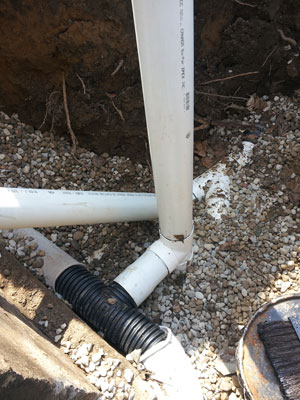
For the inside, we installed an interior perimeter drain on the two affected walls. That meant a neat saw cut about 200 millimetres out from the wall, excavation to the footing, and a perforated 100‑millimetre pipe set in clean stone. Weep holes were drilled at the bottom course of block to relieve the internal block cavities. A dimpled membrane ran from slightly above grade to the trench, acting as a drainage plane. The pipe tied into a sealed sump basin with a 1/2‑horse pump. We left a port on the sump lid for future radon testing, since sealing efforts can change basement air patterns and it pays to be ready. We preemptively added a wet basement london ontario check valve and a dedicated electrical circuit, with the outlet mounted above typical splash height.
Costs for interior systems vary with access and obstacles. In this case, the range landed between $80 and $120 per linear foot, and the run was roughly 45 linear feet including the pit and discharge line. The crew completed the work in two days. The immediate result was boring in the best way. The next two storms moved water through the new channel, and the slab stayed dry. The musty odor faded over three weeks, helped by a higher capacity dehumidifier set to 50 percent.
Why this worked: block foundations do not respond well to spot patching when the entire assembly is handling water. By giving the water a faster path to the sump, then cutting the inflow from the roof and grading, we relieved pressure without the disruption of exterior excavation. Exterior waterproofing is still the gold standard when space and budget allow, but on older side lots with fences and mature plantings tight to the wall, the interior route achieves 80 to 90 percent of the benefit for far less cost and disruption.
Case 2: Byron two‑storey, poured foundation with a leaky window well
A newer home, late 1990s, sat on a slight hill in Byron with two egress window wells on the west side. The owners noticed water staining below one window after wind‑driven rain and a minor flood during a week of alternating freeze and thaw. When we pulled back the gravel in the well, we found silt pooling under the well frame, a clogged drain tile that should have dropped to the footing level, and clay compacted hard as concrete around the well walls, which meant surface water could not escape.
Two issues, one immediate, one preventive. We excavated the window well down to the weeping tile elevation, cleaned the clogged vertical pipe, and replaced it with a rigid PVC riser wrapped in a sock filter. Around that, we placed 19‑millimetre clear stone up to about 150 millimetres below the window. We lined the cut with filter fabric to keep fines out. Then we added a larger well with a lid and regraded the topsoil to fall away. While open, we found two hairline cracks radiating from the lower corner of the window opening. From the interior, we injected a flexible polyurethane foam into each crack. The urethane expands on contact with moisture and fills the full depth, which keeps the crack watertight even if the concrete moves slightly with seasonal changes. We added a small splash pad under the west‑side downspout that was dumping right into the well zone on heavy rains.
This fix cost less than an exterior wall excavation and worked after the next storm cycle. The owner asked about futureproofing. If the downspouts are kept extended and the well drain is checked once a year, the system should stay stable. Window wells often leak because they are missing the simplest ingredient: a functional drain at the bottom tied to the perimeter tile. In many homes built during the late 90s boom, those pieces were omitted or installed poorly. A targeted repair beats a full dig here, as long as the cracks are sealed and the wells can breathe and drain.
Case 3: Westmount split‑level with backups blamed on the foundation
Not every wet basement in London, Ontario needs classic basement waterproofing. A family in Westmount called about fresh water on the floor after rains that should not have been enough to push through the walls. The basement had a sump that seemed to work, the walls were dry, but three times in a season they found water near the floor drain. The first plumber had snaked the main and declared it clear. The second had recommended an interior drain system.
The pattern did not fit seepage. The water was clean but came up at a floor fixture, not at the base of the walls. On the next rain event, we set a simple test: a drain plug with a water alarm in the floor drain, and dye tabs in the laundry tub. When the storm hit, the street drains filled and the floor drain started to rise. The sump ran normally. The dye remained in the laundry tub. It was a combined sewer surcharge problem, not a foundation leak.
We replaced the existing floor drain with a model that allowed a retrofit backwater valve, then installed a mainline backwater valve on the sanitary. The final step was to disconnect the rear downspout that someone had tied into the footing drain decades earlier. That connection is still surprisingly common in older homes and it makes the system act like a hose directly into the drain tile during a storm. Once the downspout was redirected to the yard with a piping run and the valve in place, the problem Additional info stopped.
The lesson here is diagnostic, not cosmetic. Basement waterproofing is a broad term. Sometimes the right solution is foundation repair. Sometimes it is plumbing. Sometimes it is a grading and gutter day. If you can figure out the path the water takes, you can spend money once.
Case 4: Wortley Village century home, stone foundation and tree constraints
Older homes bring character and constraints. This 1910s house had a stone rubble foundation with lime mortar, a fieldstone exterior base that looked sound, and a lovely Norway maple one metre off the south wall. The basement had seepage along one wall and dark patches on the limewash. The owner wanted to finish a small studio down there, but anything beyond light storage was risky in its current state.
Exterior excavation along that wall would have put the maple at real risk. Cutting even a third of the critical root zone for a tree of that size often leads to long, slow decline. We tested the mortar and found it had been repointed with hard Portland cement at some point, which traps moisture and makes the stone work harder than it should. The plan needed to relieve water pressure, restore vapor permeability, and avoid deep digging.
Inside, we installed a perimeter drain along the affected wall only, tied to a sealed sump with a quiet pump and a battery backup. We chose a lower profile channel to reduce the slab cut and keep more of the original slab intact, then covered the new trench with a high compressive strength cement topping. We took the interior walls back to sound material, removed the hard cement, and repointed with a lime‑rich mortar that lets vapor move. On the exterior, we exposed selective sections to clean out shallow voids and added a narrow band of permeable landscaping with a discreet drip edge to carry roof water farther out. The downspout on that corner was re‑routed to a front garden rain chain into a dry well away from the foundation, sized to hold about 300 litres from a typical summer storm. We sealed the original cellar door with a proper threshold and weatherstrip. Stone foundations need to breathe. That breath should not be an open invitation for surface water.
This hybrid approach respects both the building and the tree. After a season, moisture readings in the wall dropped, and the owner built a floating floor section that could be lifted if service was needed. The space stayed comfortable through a wet spring and a hard winter thaw cycle.
Case 5: Masonville townhouse, tie rods and cold joints
A condo built in the early 2000s presented a cluster of dime‑sized rust spots on a basement wall. After a heavy rain, a few of the spots wept slightly. These were tie rod penetrations in a poured concrete wall. During forming, metal rods hold the forms together. When the forms are removed, the ends are clipped and the holes are patched, sometimes lightly. Over time, with small movements and a little corrosion, those patches fail.
In a case like this, a whole‑house waterproofing job makes no sense. We marked each weeping point, cleaned the surface, and injected polyurethane resin through small ports set directly in the tie rod holes. Polyurethane is ideal here. It chases the tiny pathways and swells to block water, yet remains flexible. One corner also had a cold joint where two concrete placements met on different days. That joint can be a line of weakness. We chased it with the same injection method, working bottom to top until refusal. The job was half a day, ten penetrations and one joint, with two techs.
The result was immediate. The next rain left the wall dry. The board was happy because the repair was surgical, inexpensive compared to a dig, and did not require exterior permissions or landscape disturbance.
Interior versus exterior waterproofing, and picking the right path
There is a reason debates around basement waterproofing in London, Ontario can get heated. Each method has staunch defenders. The truth is more nuanced. Exterior systems stop water before it enters. Interior systems control it once it arrives. Foundations, budgets, access, and risk tolerance all matter. Here is the short version that I use when walking homeowners through the decision.
- Exterior excavation with new membrane and drainage: Best at stopping hydrostatic pressure, ideal for poured walls with good access. Higher cost, heavy disruption, strong long‑term value. Interior perimeter drain with sump: Highly effective pressure relief for block walls or where exterior access is blocked. Lower cost, faster install, still requires managing power and pump redundancy. Crack and tie rod injection: Precise, cost‑effective for isolated leaks in poured concrete. Not a whole‑house solution, but excellent for targeted repairs. Grading and gutter corrections: Cheapest water control, often the biggest impact. Needs seasonal maintenance and vigilance around downspout discharge. Hybrid approaches: Common on older homes or tree‑sensitive lots. Balance breathability, pressure relief, and realistic logistics.
Notice what is missing from that list: miracle paints and interior cement skim coats as standalone fixes. They have a role in finishing systems, not in primary waterproofing. If the wall is under pressure, a film on the inside cannot do the heavy lifting.
Foundation settlement, frost, and when structural repair is the first order of business
Most wet basement calls are about water management. A minority are about movement. Certain pockets of London have softer soils and greater water table swings. If a corner is dropping, cracks often form in a predictable stair‑step pattern in block, or as diagonal cracks in poured walls, wider at the top. Doors stick, floors tilt, and, yes, water finds those openings.
One house near the river in west London had a two‑finger crack at a corner that had opened over three years. The downspouts dumped next to that corner, and the clay had cycled dry to wet repeatedly. The right move here was to stop the cause and then stabilize the structure. We corrected the drainage, then installed two helical piers under the settling corner to transfer the load to deeper, more competent soils. Only after the movement was under control did we address the crack with epoxy injection for structural bond, followed by a flexible seal on the exterior when the small excavation was closed. Foundation repair in London, Ontario can be as simple as redirecting water or as involved as underpinning. The sequence matters. Stop the driver, then fix the damage.
Moisture that is not a leak
Several homeowners call about a wet basement in London, Ontario only to find it is condensation. Summer air with high humidity hits a cool foundation wall or uninsulated duct, and water forms. A dehumidifier set correctly, rigid foam on the walls during a renovation, and basic air sealing can clear the problem without a trench or a pump. I keep a cheap hygrometer in the truck for a reason. If the basement is sitting at 65 to 70 percent relative humidity in July, cold drinks will sweat on the workbench. So will your walls.
A simple test helps: tape a square of plastic foil to the wall for two days. If the back of the plastic is wet, moisture is pushing through from the outside. If the face is wet, it is condensation. A fix should match the diagnosis.
Cost, timelines, and what realistic expectations look like
People sometimes want a single price for basement waterproofing. That is like asking what a car costs. The ranges in London are wide, but a few anchors help homeowners budget. Interior perimeter drains often fall between $80 and $140 per linear foot, depending on obstacles, slab thickness, and disposal requirements. Sump systems with a quality pump, sealed lid, and a battery backup add $1,500 to $3,000. Exterior excavation with new membrane, new weeping tile, and backfill correction can range widely with depth and access, from a few hundred dollars per linear foot up to numbers that make sense only when combined with other exterior work. Crack injections run a few hundred dollars per crack for straightforward cases. Helical piers for settlement are quoted per pier, with site conditions determining the count. Most residential projects complete in one to three days for interior work, and three to seven days for exterior, weather permitting.
No contractor can guarantee against every future event. A blocked city storm line or a 100‑year rainfall on saturated ground can overwhelm even a well‑designed system. What a good design buys you is resilience. If the gutters are clear, the downspouts are extended, the grading sheds water, and the drains have a path to a reliable pump with backup power, the odds tilt strongly in your favour.
Small maintenance habits that keep basements dry
London’s climate punishes neglect. A thirty‑minute check at the right time saves a service call.
- Clean gutters in spring and late fall, and extend downspouts at least two to three metres from the foundation. Rigid pipe beats accordion flex in durability and flow. Walk the perimeter after a storm. Puddles against the wall, eroded mulch, or a soft spot near a window well reveal where to focus. Test the sump quarterly. Lift the float or pour a bucket until the pump kicks in. Listen for a smooth start and discharge. If your pump is older than seven to ten years, plan its replacement, not an emergency. Keep soil grading pitched away from the house. If you see exposed foundation, add topsoil and compact lightly, then mulch to reduce erosion. If your home had downspouts tied into the old footing drain, disconnect and redirect to daylight. Those ties turn stormwater into surcharge headaches.
These are simple chores, but they are the difference between a system that lasts and one that fails on the first long rain.
A few missteps I still see, and how to avoid them
The most common mistakes are expensive because they look cheap up front. Painting a leaking block wall with a sealer and calling it waterproofing is one. Another is tying a new sump into an overloaded storm lateral. The pump runs, the line surcharges, and the water has nowhere to go. Cutting roots for an exterior dig without a certified arborist’s input is a third. Your basement dries for a year, then the shade tree that kept your yard pleasant starts dying back and you wish you had chosen an interior approach on that side.
A more subtle error is to install a high‑quality interior drain and then skip the battery backup on the pump to save a few hundred dollars. Power most often fails during storms. The backup pays for itself the first time you do not mop at 2 a.m.
Finally, owners sometimes want to finish basements the week after waterproofing. Give the space a season. Track humidity with a simple meter. If you add insulation, choose rigid foam against the wall, not fiberglass batts. Organic materials should sit above the slab on a proper subfloor, not directly on concrete.
What these cases say about solving wet basements here
Patterns repeat across London. Block walls leak at the base and corners when exterior water has too easy a path. Poured walls leak at cracks, tie rods, and window openings. Stone wants to breathe and punish hard, impermeable repairs. Window wells fail because they lack a simple drain or because they sit like bowls in hardpan clay. Downspouts, more than any other single feature, decide whether water congregates at your wall or moves away.
When basement waterproofing in London, Ontario works, the plan is layered. It treats the source, the path, and the symptom. It might start on the roofline with a new elbow and end at the slab with a quiet pump. Foundation repair in London, Ontario is the same way. The structural fix is only complete when the water that caused the movement is controlled.
For homeowners, the smartest first step is not a product, it is a diagnosis. Ask the contractor to sketch where the water is coming from and where it will go after the work. If the plan cannot be drawn on a piece of paper in a way that makes sense to you, keep asking questions. The right answer will make you nod. Your basement, and your peace of mind, are worth that patience.
Ashworth Drainage — Business Info (NAP)
Name: Ashworth DrainageAddress: 514 Hale St, London, ON N5W 1G8
Phone: (519) 660-9375
Website: https://www.ashworthdrainage.ca/
Email: [email protected]
Hours:
Monday: 9:00 AM – 5:00 PM
Tuesday: 9:00 AM – 5:00 PM
Wednesday: 9:00 AM – 5:00 PM
Thursday: 9:00 AM – 5:00 PM
Friday: 9:00 AM – 5:00 PM
Saturday: Closed
Sunday: Closed
Open-location code (Plus Code): XRR3+HV London, Ontario
Map/listing URL: https://maps.app.goo.gl/9kaoXAxRtJRP1ThS9
Embed iframe:
Socials (canonical https URLs):
Facebook: https://www.facebook.com/ashworthdrainage/
X: https://twitter.com/ashworthrules
Instagram: https://www.instagram.com/ashworthdrainage/
https://www.ashworthdrainage.ca/
Ashworth Drainage provides basement waterproofing and foundation repair services in London, Ontario and surrounding areas in Southwestern Ontario.
The company helps homeowners address wet basements, water intrusion, and drainage issues with solutions that fit the property’s conditions.
Service requests can include foundation repair, waterproofing options, sump pump and drainage-related work, and related assessments.
Ashworth Drainage is based at 514 Hale St, London, ON N5W 1G8.
To reach the team, call (519) 660-9375 or email [email protected].
Business hours are Monday to Friday 9:00 AM–5:00 PM, with the office closed Saturday and Sunday.
For directions and listing details, use the map listing: https://maps.app.goo.gl/9kaoXAxRtJRP1ThS9.
Popular Questions About Ashworth Drainage
What does basement waterproofing help prevent?Basement waterproofing is intended to reduce water intrusion and moisture problems that can lead to dampness, leaks, odors, and damage over time.
How do I know if I may need foundation repair?
Common signs can include visible cracks, water seepage, shifting or uneven areas, or recurring moisture problems; an on-site assessment is usually the best way to confirm causes and options.
What areas does Ashworth Drainage serve?
Ashworth Drainage serves London, Ontario and surrounding areas in Southwestern Ontario.
What are Ashworth Drainage’s hours?
Monday–Friday 9:00 AM–5:00 PM; Saturday closed; Sunday closed.
How can I contact Ashworth Drainage?
Phone: +1-519-660-9375
Email: [email protected]
Website: https://www.ashworthdrainage.ca/
Map: https://maps.app.goo.gl/9kaoXAxRtJRP1ThS9
Facebook: https://www.facebook.com/ashworthdrainage/
X: https://twitter.com/ashworthrules
Instagram: https://www.instagram.com/ashworthdrainage/
Landmarks Near London, ON
1) Kiwanis Park2) Western Fair District
3) Covent Garden Market
4) Victoria Park
5) Budweiser Gardens
6) Museum London
7) Fanshawe Conservation Area